Interview with the President of the Institute of Financial Studies (ISF)
1. Tell us about yourself and about the organization you lead.
My professional story is closely linked to the development of the Romanian capital market. I belong to the first generation of brokers at the Bucharest Stock Exchange, a generation that had the privilege and the responsibility of helping build a market economy almost from scratch.
When I started my career as a broker, Romania was going through profound economic changes. Everything was new: the regulations, the institutions, the mechanisms of the market. For young professionals, every day was an opportunity to learn something that had not existed in practice only a few years earlier. Looking back, I realize that those years shaped my understanding of finance, risk, and, most importantly, the importance of trust in economic relationships.
Education played a decisive role in my professional journey. I graduated from the Academy of Economic Studies in Bucharest and later continued my studies at the Bucharest Business School (BBS–INDE), while also attending numerous international programs, including the Regional Administrators and Managers Program at Georgetown University in the United States. However, beyond formal education, some of the most valuable lessons came from practice, from working with experienced professionals, and from constantly challenging myself to adapt to new realities.
Over the years, I have had the opportunity to hold several leadership positions, including General Manager of the Bucharest Stock Exchange, President of the Central Depository, and, currently, President of the Institute of Financial Studies. At the same time, I also serve as Director in the insurance sector within the Financial Supervisory Authority.
One of the defining moments of my career was undoubtedly 2011, when, as CEO of the Bucharest Stock Exchange, I coordinated the listing of Fondul Proprietatea, the largest listing in Central and Eastern Europe at that time. It was not only a major professional challenge but also a milestone for the Romanian capital market.
Another important stage in my development was the period spent abroad, working in Prague and Vienna. Those years broadened my horizons and allowed me to better understand how mature financial markets function. In 2007, I was involved in connecting, through the European passport mechanism, the first foreign broker and investment bank to the Bucharest Stock Exchange trading system. At that time, it was an important step toward integrating Romania into the European financial landscape.
Today, as President of the Institute of Financial Studies, I see our mission as going beyond professional training. ISF is a bridge between academia, the financial industry, regulators, and society. Although all our projects are important, I am particularly proud of the financial education programs that we provide free of charge. Helping young people and ordinary citizens better understand financial concepts means contributing to a more responsible and prosperous society.
2. What are the major trends shaping the financial industry today?
The financial industry is going through one of the most profound transformations in its history. Three major forces are changing the way financial institutions operate: technology, sustainability, and changing consumer expectations.
The first trend is digitalization. Artificial intelligence, automation, big data, and fintech solutions are transforming everything, from banking and insurance to investment services. Customers expect faster, simpler, and more personalized services, while companies are investing heavily in technology to meet those expectations.
According to recent estimates, the global fintech market exceeded USD 300 billion in 2024 and is expected to continue growing at double-digit rates over the next decade. At the same time, Europe has become one of the world’s most dynamic regions in terms of digital payments and financial innovation.
The second trend is sustainability. Ten years ago, environmental, social, and governance criteria were considered niche topics. Today, they are at the center of strategic decisions. Investors increasingly want to know not only how profitable a company is, but also what impact it has on society and the environment. The European Union has become a global leader in sustainable finance through initiatives such as the European Green Deal and the Sustainable Finance Disclosure Regulation (SFDR). According to European Commission estimates, achieving climate neutrality by 2050 will require annual investments of hundreds of billions of euros.
The third trend is financial education. Financial products are becoming increasingly sophisticated, and citizens need the knowledge to make informed decisions. I strongly believe that financial literacy will become one of the key skills of the twenty-first century.
According to Eurobarometer surveys, financial literacy levels vary significantly across Europe, and many citizens still struggle to understand basic concepts related to inflation, investment diversification or long-term savings.
Romania follows these global trends, although naturally at a different pace. The good news is that younger generations are much more open to technology and innovation than previous generations.
3. What opportunities do you see for the future?
I see tremendous opportunities in three areas.
First, artificial intelligence will fundamentally transform financial services. It will help institutions better understand customer needs, improve risk management, and increase efficiency.
Second, sustainable finance will create entirely new business models and investment opportunities. The transition toward a greener economy will require massive investments, and the financial sector will play a central role in financing that transformation.
Third, and perhaps most importantly from my perspective, financial education represents an extraordinary opportunity. A society that understands finance makes better economic decisions, saves more, invests more wisely, and is more resilient during periods of uncertainty.
For me, this is not only a professional conviction but also a personal mission.
4. How did the pandemic affect your industry?
The pandemic was both a challenge and an opportunity.
Like many other sectors, the financial industry had to adapt almost overnight. Companies moved employees to remote work, accelerated digital projects, and found new ways to communicate with clients.
At the same time, the pandemic proved that institutions capable of adapting quickly could emerge even stronger. Projects that were initially planned for several years had to be implemented in a matter of months.
Personally, one of the most important lessons I learned during that period was that technology is essential, but people remain the most valuable asset of any organization.
5. Will remote work remain a long-term solution?
I believe the future belongs to hybrid models. My experience has shown me that flexibility is important, but face-to-face interaction remains essential for creativity, trust, and team spirit.
Some activities can be performed very efficiently from anywhere in the world, while others require direct collaboration. The challenge for managers is to find the right balance between efficiency and human connection.
In the end, organizations are built by people, not by technology.
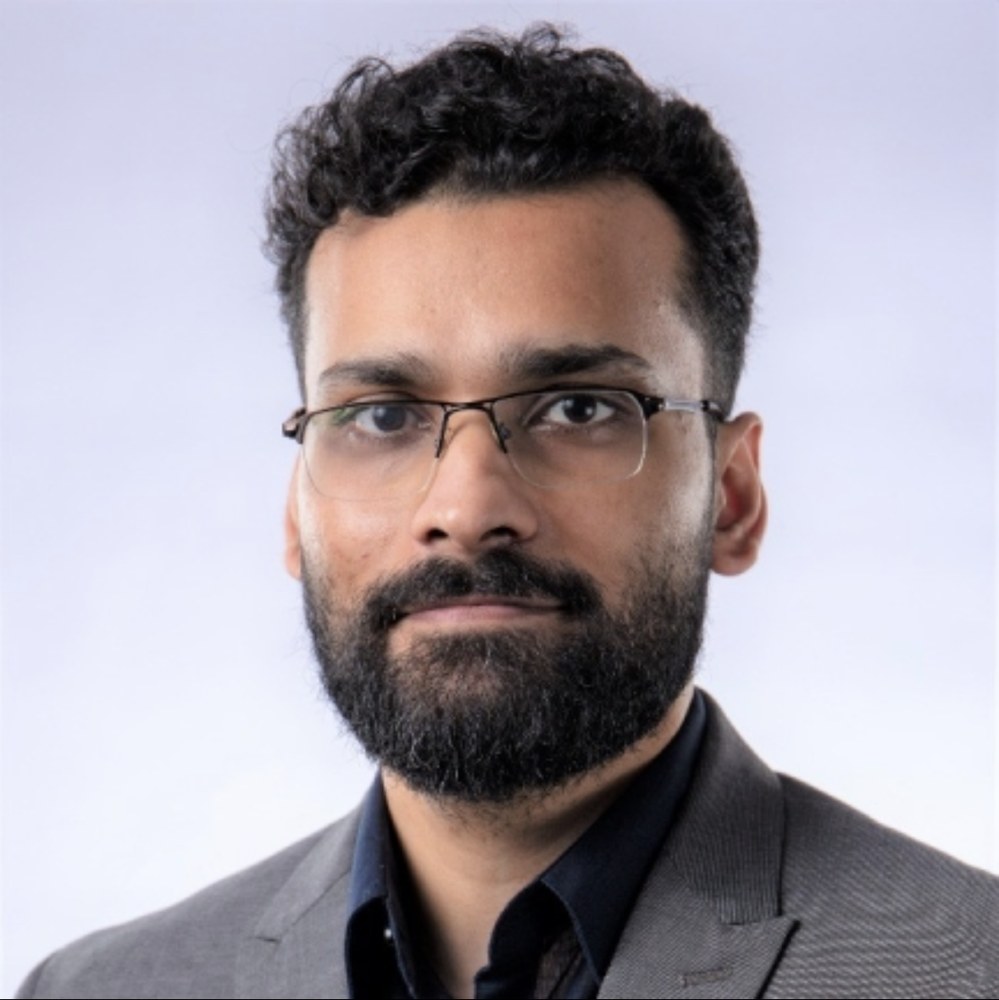
Interview with Valentin Ionescu, President of the Institute of Financial Studies
6. Has the war in Ukraine affected your industry? How?
Absolutely. Although the financial sector is geographically far from the battlefield, it is directly exposed to uncertainty. The war in Ukraine has generated inflationary pressures, energy shocks, volatility in financial markets and a general sense of unpredictability among investors and consumers.
From the insurance perspective, geopolitical risks, cyber threats and operational resilience have become major concerns. In the capital markets, investors tend to become more cautious, liquidity can be affected and risk perception changes almost overnight.
For managers, the most important lesson is that crises have become the new normal. Today, leadership is less about predicting the future and more about building organizations that can adapt to different scenarios. A manager must remain calm, communicate transparently and avoid impulsive decisions driven by fear.
Companies can prepare for such situations by diversifying their activities, investing in technology, strengthening risk management and, perhaps most importantly, creating teams capable of adapting quickly to change.
7. Pandemic, war and economic crisis at the same time. What decisions would you make?
In recent years, managers have had to navigate an unprecedented combination of challenges. If there is one lesson I have learned throughout my career, from the trading floor of the Bucharest Stock Exchange to the financial supervisory sector, it is that resilience is built long before a crisis begins.
The priorities should be clear:
- protect employees and maintain team cohesion;
- preserve financial stability and liquidity;
- continue investing in technology and education;
- communicate honestly with stakeholders;
- prepare alternative scenarios.
During difficult periods, companies often make the mistake of reducing investments in human capital. In my opinion, exactly the opposite approach is needed. Organizations that continue to invest in people, knowledge and innovation are usually the first to recover.
8. What are the main challenges and opportunities created by accelerated digitalization?
Digitalization is probably the most important transformation of the financial sector since globalization.
The opportunities are obvious: faster services, lower costs, greater accessibility and better customer experience. Today, financial products that once required several meetings and extensive paperwork can be accessed from a smartphone in just a few minutes.
However, digitalization also creates challenges. Cybersecurity risks are increasing, regulations struggle to keep pace with innovation and the demand for highly qualified specialists is growing rapidly.
At ISF, one of our priorities is precisely to help professionals develop the skills necessary for this new digital environment.
Technology itself is never enough. The real competitive advantage comes from people who know how to use technology intelligently and responsibly.
9. How do you create a healthy organizational culture?
Throughout my career, whether as a broker, CEO of the Bucharest Stock Exchange, President of the Central Depository or President of ISF, I have learned that organizations are ultimately communities of people.
A healthy organizational culture is based on several principles:
- trust;
- professionalism;
- transparency;
- mutual respect;
- continuous learning;
- recognition of merit.
People perform better when they feel that their work matters and that their ideas are valued.
I also believe that leaders must lead by example. Employees do not follow speeches; they follow behavior.
At ISF, we encourage collaboration between generations because young professionals bring energy and new perspectives, while experienced professionals contribute with wisdom and strategic vision.
10. Looking back, what were the biggest challenges during the pandemic?
The greatest challenge was uncertainty.
No business plan, no university course and no previous experience had prepared organizations for a situation in which entire economies would suddenly stop.
At the same time, the pandemic forced us to accelerate changes that otherwise might have taken ten years. Digitalization, remote work and online education evolved in months rather than years.
Paradoxically, crises often accelerate innovation.
11. How do you perceive technological development in your industry and in your own career?
When I started my career as one of the first brokers on the Bucharest Stock Exchange, trading technology was fundamentally different from what we see today.
Over the years, I have witnessed the transition from traditional brokerage to algorithmic trading, electronic platforms, artificial intelligence and advanced data analytics.
Technology has transformed not only financial institutions but also the role of professionals. Today, technical expertise alone is no longer sufficient. Modern specialists must combine financial knowledge with digital skills, strategic thinking and adaptability.
Personally, I have always considered learning to be a continuous process. My experience in Prague and Vienna taught me that the willingness to embrace change is often more important than any particular technical skill.
12. Is there anything else you would like readers to know about your organization or industry?
One of the misconceptions about finance is that it is only about numbers.
In reality, finance is about people, trust and responsibility. Every investment decision, every insurance policy and every pension plan affect someone’s life.
At the Institute of Financial Studies, we are particularly proud of our financial education programs offered free of charge. Helping people understand concepts such as saving, investing, risk and financial planning is one of the best investments we can make in the future of our society.
Financial education is not just an economic issue—it is a civic responsibility.
13. What are your industry’s concerns regarding sustainability?
Sustainability is much broader than environmental protection. It also includes social responsibility, ethical governance and long-term economic stability.
Financial institutions increasingly evaluate not only profitability but also social impact and environmental consequences.
At ISF, we actively promote education related to sustainable finance and ESG principles because future generations of managers and investors will have to integrate sustainability into every strategic decision.
I believe that companies capable of combining profitability with responsibility will be the winners of the next decades.
14. What question is missing from this interview?
Question: Looking back, what achievement gives you the greatest satisfaction?
Without hesitation, I would say contributing, together with many talented colleagues, to the modernization of Romania’s financial markets.
Coordinating the listing of Fondul Proprietatea in 2011, the largest listing in Central and Eastern Europe at that time, remains one of the defining moments of my career. Equally important was my contribution to connecting the first foreign broker and investment bank to the Bucharest Stock Exchange trading system in 2007.
However, beyond institutional achievements, what gives me the greatest satisfaction today is seeing former students and young professionals becoming successful leaders in the financial industry.
That is perhaps the most meaningful legacy anyone can leave behind.
15. Which business publications do you read regularly?
I regularly follow publications such as:
- Financial Newspaper (Ziarul Financiar)
- Bloomberg;
- The Economist;
- Financial Times;
- specialized European financial publications.
I appreciate sources that combine economic analysis with geopolitical and technological perspectives.
What I sometimes miss in today’s economic media landscape is more long-term thinking. Too often, public debates focus on daily events, while the real transformations—demographics, artificial intelligence, climate change and education—receive less attention than they deserve.
16. What advice would you give to students and young professionals?
My first piece of advice is simple: never stop learning.
The world changes faster than ever before. The diploma you receive at graduation is not the end of your education; it is only the beginning.
Second, do not be afraid to leave your comfort zone. Some of the most important lessons in my own career came from accepting difficult assignments and working abroad, in Prague and Vienna, where I discovered different professional cultures and new ways of thinking.
Third, integrity matters. Professional success built without ethics is fragile.
Finally, be patient. Careers are marathons, not sprints. Real expertise takes years to build. Curiosity, discipline and resilience will always be more valuable than shortcuts.
17. Recommend five books that every professional should read.
1. Thinking, Fast and Slow – Daniel Kahneman
An extraordinary book about decision-making and the biases that influence our judgment.
2. The Black Swan – Nassim Nicholas Taleb
Essential reading for understanding uncertainty and unexpected events—something every manager faces.
3. Principles – Ray Dalio
A practical guide to leadership, management and decision-making.
4. Good to Great – Jim Collins
An insightful analysis of why some organizations achieve excellence while others do not.
5. The Intelligent Investor – Benjamin Graham
A classic work that teaches not only investing principles but also patience and discipline.
Final thoughts
I started my career in the early years of the Romanian capital market, at a time when almost everything had to be built from scratch. More than three decades later, despite all the technological changes and economic transformations, one thing remains unchanged: trust is the foundation of every financial system.
Institutions, markets and technologies evolve, but people remain at the center of everything we do.
If there is one lesson that my professional journey has taught me, it is that success is never an individual achievement. It is always the result of education, teamwork, integrity and the willingness to keep learning, regardless of age or position.
ABOUT
- Valentin Ionescu, President, Institute of Financial Studies (ISF); INDE MBA