This article explores how business schools are engaging in implementing Sustainable Development Goals (SDGs) and which best practices examples in business schools worldwide can be revealed (e.g. Romania, India, Morocco).
There are 17 SDGs and 169 targets to be reached by 2030. Both private and public sectors have an important contribution in reaching these goals.
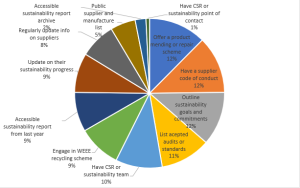
A study carried out in Europe 2024 by RetailX (”Retail Top 500 Brands D2C Europe”) underline the most common sustainability practices by direct- to- consumer brands (Chart no 1):
- Offer a product mending or repair scheme (16%);
- Have a supplier code or conduct (16%);
- Outline sustainability goals and commitments (15%);
- List accepted audits or standards (14%);
- Have CSR or sustainability team (13%);
- Engaging in WEEE recycling scheme (12%);
- Accessible sustainability report from last year (11%);
- Update on their sustainability progress (11%);
- Regularly update info on suppliers (10%);
- Public supplier and manufacture list (7%);
- Accessible sustainability report archive (3%);
- Have CSR or sustainability point of contact (1%).
Chart no 1. Most popular sustainability practices of direct- to- consumer (D2C) brands in Europe in 2024
Source: Adapted after RetailX 2024, published by Statista
However, business schools have an increased role from the management education perspective, because they train current and future generations of leaders, with best chances of impact in society today and tomorrow. Thus, a growing number of business schools have included the SDGs as part of their vision, mission and strategy, increasing from 1% in 2015 to 33% in 2020. (Weybrecht G., 2022)
Bucharest Business School’s “vision extends beyond borders, as we aim to take a leading role in shaping the future of business education in the South-East European region, equipping professionals with the skills and knowledge they need to make a meaningful, sustainable impact”. (https://bbs.ase.ro/about-us/ , accessed December 2025)
- Most popular practices of SDGs implemented by business schools
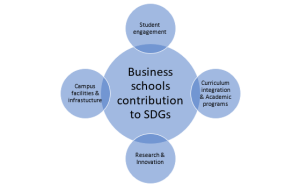
Business schools should integrate all SDGs in their activities. The interdisciplinary approaches to sustainability from business schools can focus on (Graph no 1):
- Curriculum integration, by integrating sustainability topics into courses or by creating new sustainability- focus programs;
- Research and innovation, by focusing on sustainable innovation and pollution decrease;
- Campus facilities and infrastructure, by investments in green infrastructure, energy saving, reducing waste etc.
- Student engagement, by common student-led initiatives focused on raising awareness and impacting a behavioural change.
Graph no 1. Interdisciplinary approaches to sustainability in business schools
Source: Adapted after Ankareddy S. et al., 2025
The most common practices implemented by business schools underline embedded SDGs in the curriculum, either by specific topics approached in course syllabi or through guest speakers or community projects.
Other practices that integrate SDGs by business schools refer to social projects, partnerships, student organisations, with the main purpose of raising awareness.
- Bucharest Business School @ ASE Bucharest – Innovation seen as a driver for sustainability at INDE MBA program
The main courses from INDE MBA Program, where one can find SDGs related approaches are: Entrepreneurship, Strategy, Ethics and Academic Integrity, Marketing, Operations Management etc. The main methods used are case studies, discussions, guest speakers, readings, presentations, lectures, consulting projects, study trips.
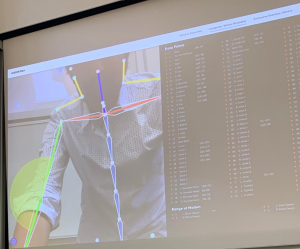
The study trip to Paris, from May 2025, was organised by Conservatoire National des Arts et Métiers (CNAM) Paris and focused on topics such as: Strategy & Leadership, Finance and Innovation. The students could visit Orange Innovation Lab and assist in innovation-led presentations: Industrial Transformation by Mark Auston (Picture no 1), Digital transformation- innovation context by Mihai Olteanu, European Security by Alain Baurer etc.
Picture no 1. Industrial transformation – success idea presentation
Source: Photo credit @ Madalina Meghisan
The study trip to Berkeley was organised by the University of California, UC Berkeley Extension and took place in July 2025. The main focus was on Innovation, technology and Entrepreneurship, with concentration on Innovation Strategy for new Technologies.
The program overview consisted in:
- Lectures on the latest innovations of UC Berkeley and Silicon Valley;
- Company visits, to better understand the applied theoretical discussions (Pictures no 2 & 3);
- Reflection and project times on Innovation framework;
- Networking/ Panel events, in order to understand the ecosystem and best practice examples.
Picture no 2. Google headquarter from Silicon Valley

Source: Photo credit @ Madalina Meghisan
Picture no 3. Apple headquarter from Silicon Valley
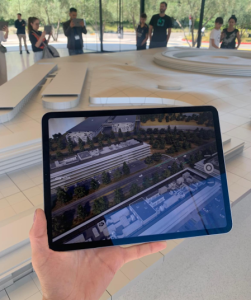
Source: Photo credit @Madalina Meghisan
- Rabat Business School – National Campaign ”Women’s Voices- from Words to Law”
International University Rabat (through Rabat Business School) and Association Marocaine de Solidarité et de Dévelopment (ASMED) implemented the campaign “16 Days Activism against Gender- Based Violence”, with a strong focus: art is a language of civic engagement and a powerful driver of change, as part of the national campaign “Women’s Voices- From Words to Law”. (Picture no 4)
Picture no 4. Mural painting ”Women’s Voices- From Words to Law”
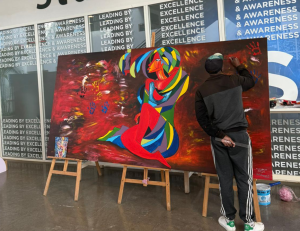
Source: Photo credit @Madalina Meghisan
The main activities supported by the campaign were (https://www.linkedin.com/posts/amsed—association-marocaine-de-solidarit%C3%A9-et-de-d%C3%A9veloppement_ueaumaroc-ue-amsed-activity-7399179909883129856-jxmW?utm_source=share&utm_medium=member_ios&rcm=ACoAAAG-TLQBE_qpXXoTyd1mddbboEiJD8G_6h0 , accessed December 2025):
- Participatory mural- where students and professors could put their painted hands on the painting, as a sign of rejection of violence against women;
- Quiz and Q&A Roulette- with the purpose to encourage open dialogue on delicate topics in order to challenge prejudice and raise awareness;
- Photo Frame – for support of this campaign (Picture no 5);
Picture no 5. Photo frame for support of the National Campaign ”Women’s Voices- from Words to Law”
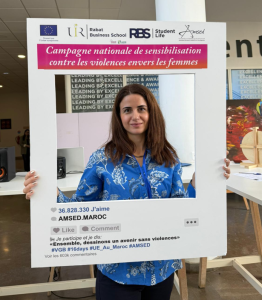
Source: Photo credit @ Madalina Meghisan
- Indian Institute of Management from Indore, India- Rural Engagement Program
Rural Engagement Program (REP) is organised by Indian Institute of Indore and focus on shaping socially future oriented leaders, by giving the students the opportunity to live in rural India for a week, with the main goals of (https://iimidr.ac.in/rural-engagement-programme-rep/ , accessed December 2025):
- Analysing and debating on various governmental programs implemented in rural areas;
- Experimenting policy administration strengths and weaknesses;
- Raising awareness on social issues from different rural areas.
Conclusions
The integration of SDGs by business schools is very much based on active leadership and support systems. Other initiatives that can be integrated by business schools can focus on:
- Implementing Green Campus Initiative to increase environmental awareness among students and professors;
- Monitoring the Carbon footprint of the institution;
Studies revealed that students from green universities are more proactive in implementing SDGs further on in their professional career.
************************
https://bbs.ase.ro/programs/mba-and-executive-mba-programs/inde-mba/
INDE MBA program offers a balanced mix between onsite classes on the Bucharest Business School campus and online classes.
The curriculum focuses on subjects such as Economics, Accounting, Marketing, Statistics, Finance, Management, Business Communication, Human Resources, Entrepreneurship, Career Development etc., which provide both the knowledge and then skills needed in a competitive business environment.
The program is organised by ASE through Bucharest Business School, in partnership with CNAM Paris (Conservatoire National des Arts et des Metiers).
INDE MBA is an international program, entirely taught in English, validated by AMBA (Association of MBAs) at an international level and ARACIS (National Council for Evaluation and Accreditation) at a national level.
The graduates of the INDE MBA program obtain a double certification:
- Diploma of MBA: Master in Business Administration, awarded by CNAM Paris
- Diploma of Master: INDE MBA, awarded by ASE Bucharest
The teaching staff is composed of professors from CNAM Paris and professors from ASE Bucharest, together with specialists from the business environment.
The Professors are specialists with solid teaching experience and business expertise at national and international level.
Classes are based on a challenging interaction with a view on building a sustainable partnership for a successful future professional development.
References
- Ankareddy, S., Dorfleitner G., Zhang L., Ok Y. S. (2025). Embedding sustainability in higher education institutions: A review of practices and challenges. Cleaner Environmental Systems, 17, 100279, https://doi.org/10.1016/j.cesys.2025.100279 .
- Weybrecht, G. (2022). Business Schools are embracing the SDGs- But is it enough? – How business schools are reporting on their engagement in the SDGS. The International Journal of Management Education, vol. 20, issue 1, 100589, https://doi.org/10.1016/j.ijme.2021.100589 .
- *** https://bbs.ase.ro/about-us/ , accessed December 2025;
- *** https://iimidr.ac.in/rural-engagement-programme-rep/ , accessed December 2025;
- *** https://www.linkedin.com/posts/amsed—association-marocaine-de-solidarit%C3%A9-et-de-d%C3%A9veloppement_ueaumaroc-ue-amsed-activity-7399179909883129856-jxmW?utm_source=share&utm_medium=member_ios&rcm=ACoAAAG-TLQBE_qpXXoTyd1mddbboEiJD8G_6h0 , accessed December 2025;
- *** Statista reports, 2025.
ABOUT
- Georgeta-Mădălina MEGHIȘAN-TOMA, Vice-Dean Bucharest Business School, Director of INDE MBA Program