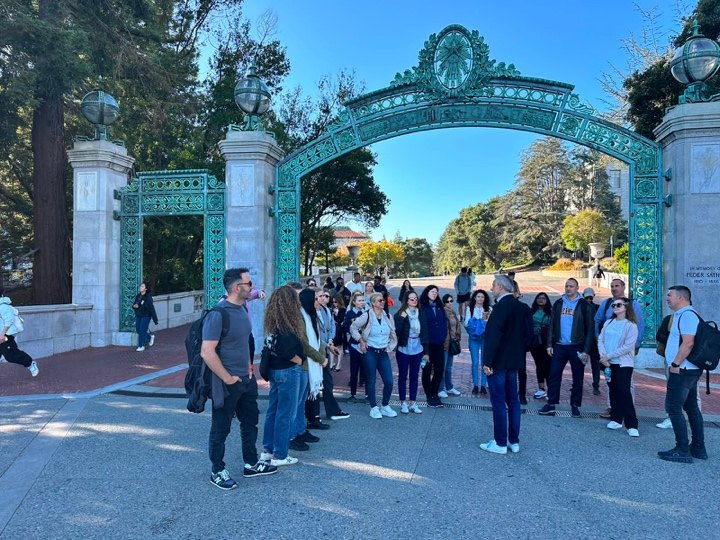
The recent INDE MBA Study Trip to the University of California, Berkeley, organized through the long-standing partnership between Bucharest Business School (ASE) and CNAM Paris, illustrates how international immersion contributes to leadership development, innovation capabilities, strategic thinking and global networking. More than an academic visit, the Berkeley experience represented a transformational educational journey that connected executive participants with one of the world’s most influential innovation ecosystems.
Learning Where Innovation Happens
Silicon Valley has become synonymous with entrepreneurship, disruptive innovation, venture capital and technological leadership. While these concepts can be studied through textbooks and case studies, experiencing them within their original context provides a fundamentally different educational impact.

Throughout five intensive days, INDE MBA participants explored not only the theoretical foundations of innovation but also the cultural and organizational principles that have transformed the San Francisco Bay Area into a global innovation hub. Sessions dedicated to entrepreneurial mindset, venture capital, design thinking, Lean Startup, artificial intelligence, sustainability, data strategy, change management and go-to-market strategy allowed students to observe how interconnected these disciplines become in real business practice.
The experience reinforced an important educational principle: innovation is not merely the outcome of technological advancement but the result of a particular mindset characterized by curiosity, experimentation, resilience and continuous learning.
One of the defining strengths of the Berkeley Study Trip was the opportunity to learn directly from internationally recognized academics, innovation experts, entrepreneurs and industry executives. Each session addressed a critical capability required by contemporary leaders, while together they created a coherent learning journey—from entrepreneurial thinking and innovation management to responsible AI, sustainability, organizational transformation and strategic leadership.
Gigi Wang – Developing the Entrepreneurial Growth Mindset
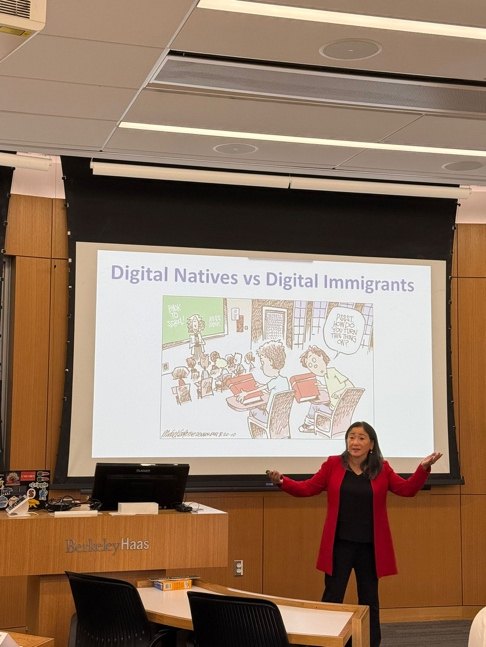
The study trip opened with an inspiring session delivered by Gigi Wang, Industry Fellow at the Sutardja Center for Entrepreneurship & Technology (SCET), UC Berkeley.
Her presentation emphasized that innovation is fundamentally a mindset before becoming a technological achievement. Participants explored how successful entrepreneurs embrace uncertainty, view failure as a valuable learning opportunity, cultivate resilience, and continuously reinvent themselves. Rather than relying solely on technical expertise, innovative leaders develop curiosity, adaptability, and a willingness to experiment.
George Panagiotakopoulos – Thinking Like Investors
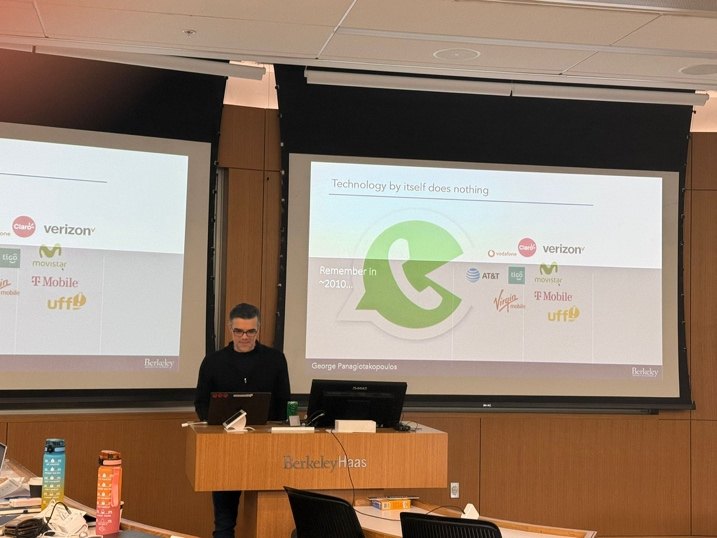
George Panagiotakopoulos from Berkeley SkyDeck introduced participants to the logic behind venture capital decision-making.
The session focused on how investors evaluate business opportunities, identify scalable business models, assess entrepreneurial teams and estimate long-term value creation potential. Students gained a deeper understanding of investment criteria, business scalability, competitive advantage and risk evaluation.
Ted Klein – Building High-Performing Teams
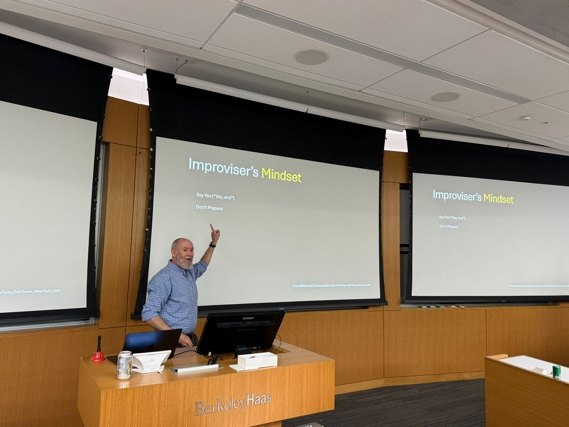
Ted Klein facilitated an interactive workshop dedicated to creative collaboration and rapid team building.
Through experiential learning activities, participants strengthened communication, trust, collaboration and psychological safety—critical elements of high-performing organizations. The workshop demonstrated that innovation rarely emerges from individual effort alone but rather from diverse teams capable of combining different perspectives, while working toward common objectives.
Barry Katz – Innovation Ecosystems and Design Thinking
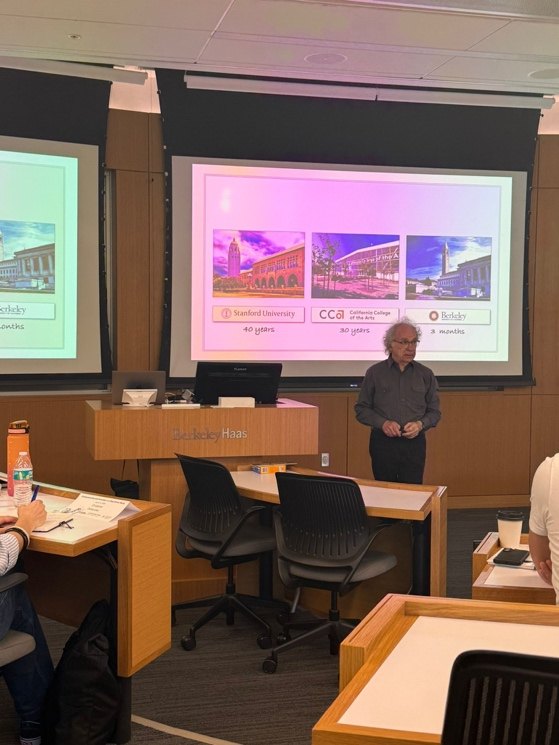
Professor Barry Katz offered a fascinating exploration of Silicon Valley’s evolution into the world’s leading innovation ecosystem.
The session examined how universities, entrepreneurs, investors, public institutions and visionary leaders collectively created an environment conducive to continuous innovation. Students also explored the principles of Design Thinking, emphasizing empathy, user-centered problem solving, rapid prototyping and iterative learning.
Gautier Vasseur – Data Storytelling for Executive Leaders
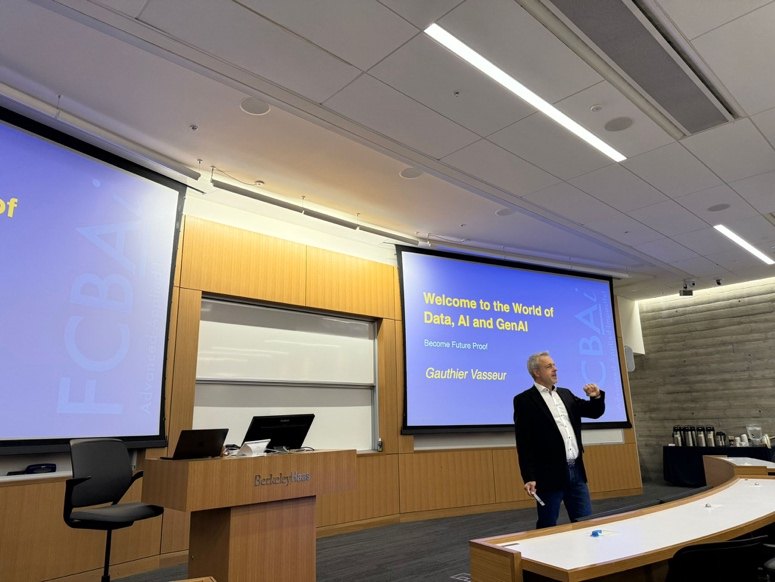
Gautier Vasseur demonstrated that data alone rarely influences strategic decisions unless it is communicated effectively.
Participants explored techniques for transforming analytical insights into compelling narratives capable of persuading stakeholders, investors, customers and employees. The session emphasized the intersection between analytical thinking and communication, illustrating how storytelling enhances executive influence and organizational alignment.
Areen Shahbari – Inclusive Leadership in Global Organizations
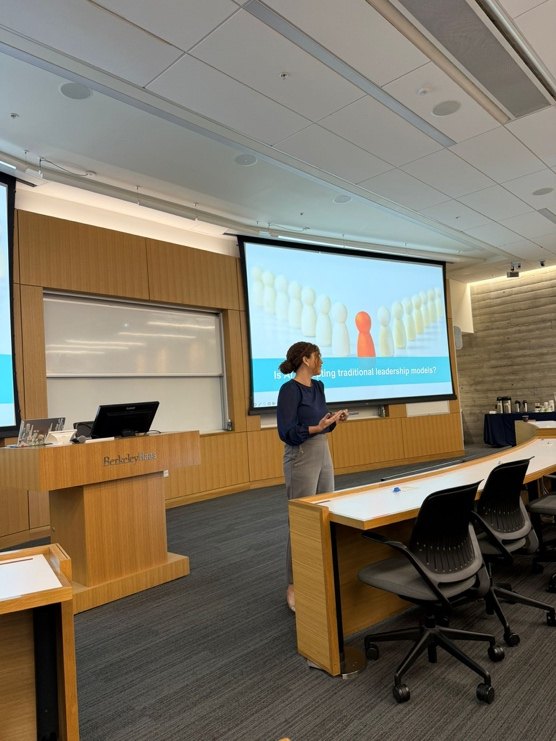
Areen Shahbari focused on diversity, equity, inclusion and cultural intelligence as strategic drivers of organizational performance.
Participants discussed how inclusive leadership fosters innovation by encouraging multiple perspectives, reducing unconscious bias and strengthening employee engagement. Rather than treating diversity as a compliance issue, the session presented inclusion as a competitive advantage in increasingly global business environments.
The discussion reinforced the importance of empathy, active listening and cultural awareness as essential executive competencies.
Elizabeth Glenewinkel – Customer-Centered Innovation
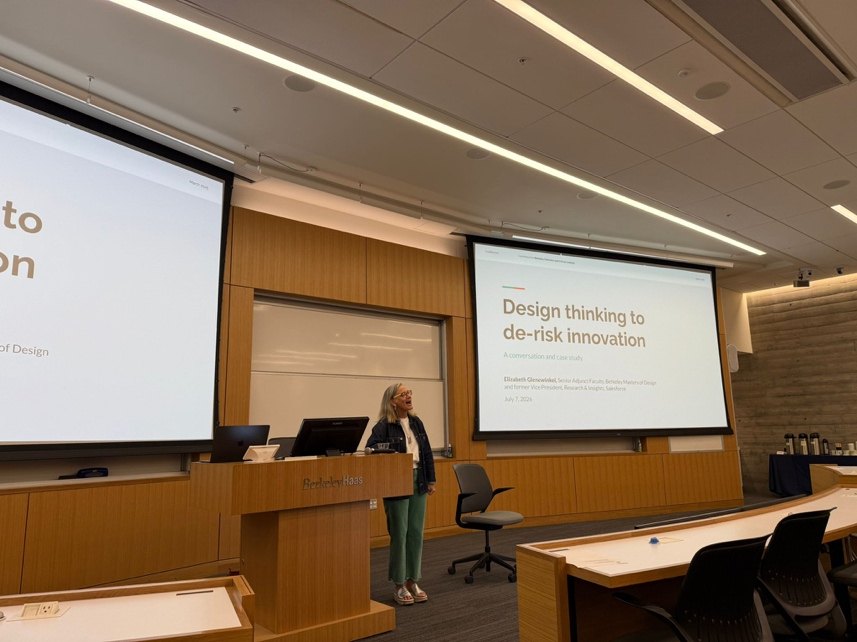
Drawing upon practical examples inspired by Salesforce, Elizabeth Glenewinkel guided participants through the application of Design Thinking to real business challenges.
Students worked with customer insights to identify unmet needs, redefine problems, generate innovative solutions and develop customer-centered value propositions.
The session highlighted that sustainable innovation begins with a profound understanding of customer experience rather than technology alone.
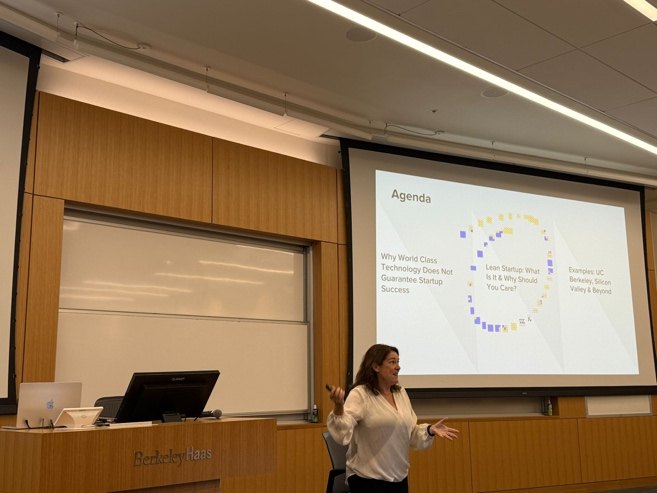
Rhonda Shrader – Lean Startup Methodology
Rhonda Shrader introduced one of Silicon Valley’s most influential innovation frameworks: Lean Startup.
Participants learned how continuous experimentation, rapid testing, minimum viable products (MVPs), and customer feedback reduce uncertainty during innovation processes.
The methodology encourages organizations to validate ideas quickly, minimize wasted resources and continuously adapt products based on market evidence rather than assumptions.
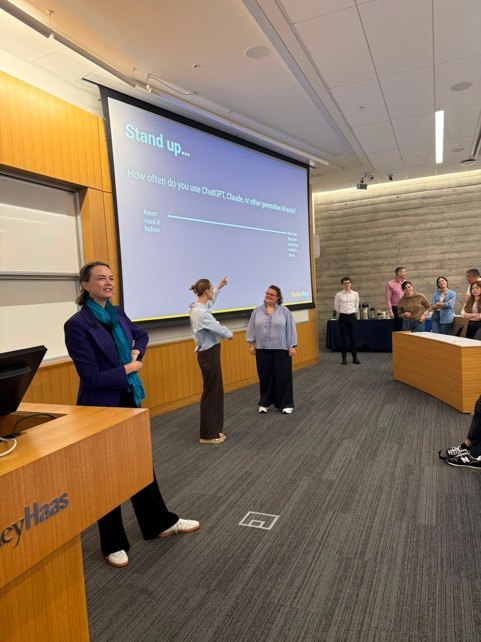
Genevieve Smith – Responsible Artificial Intelligence
Genevieve Smith explored one of today’s most significant management challenges: ensuring that Artificial Intelligence is developed and implemented responsibly.
The discussion addressed ethical governance, transparency, accountability, fairness and organizational responsibility while highlighting the enormous opportunities AI creates for business innovation.
Participants reflected on the role of executive leaders in balancing technological progress with ethical decision-making and societal impact.
Nolwenn Godard – Sustainability in the AI Era
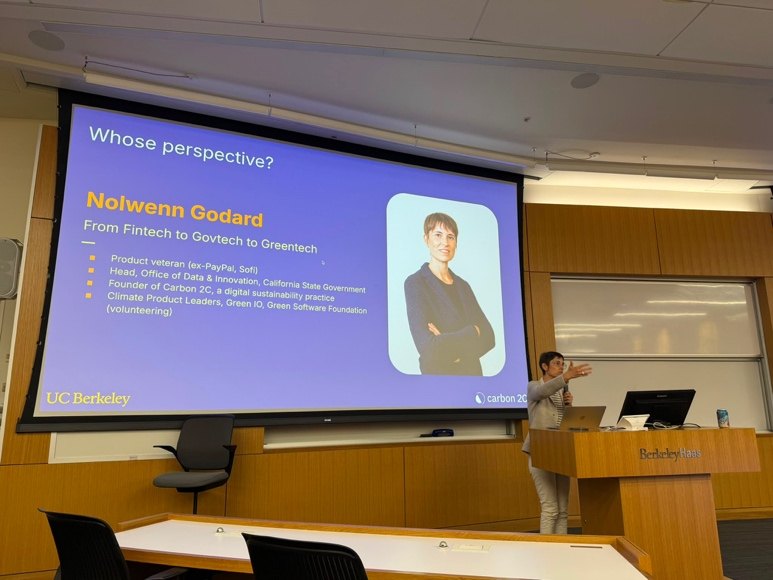
Nolwenn Godard demonstrated how sustainability and technological innovation increasingly reinforce one another.
The session emphasized that organizations capable of integrating AI with environmental responsibility, social impact, and long-term value creation will achieve stronger competitive positioning in the future.
Rather than viewing sustainability as a constraint, participants explored its role as a catalyst for innovation and organizational resilience.
Caroline Simard – Leading Organizational Change
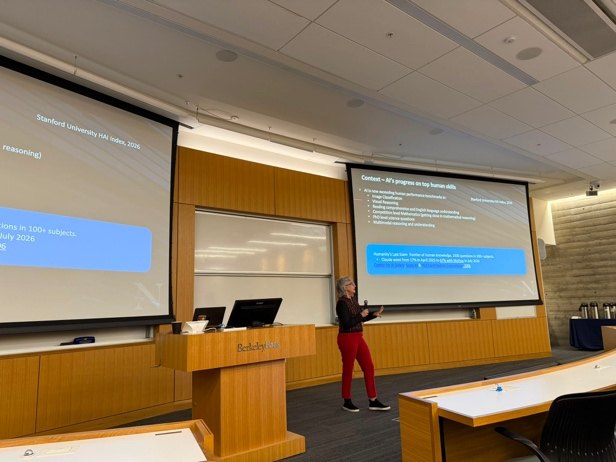
Caroline Simard addressed one of the most difficult managerial responsibilities: leading organizational transformation.
Participants explored strategies for overcoming resistance to change, engaging employees, building trust and creating organizational cultures capable of continuous adaptation.
The session highlighted that successful transformation depends primarily on people rather than technological solutions.
Holly Roland – Go-to-Market Strategy
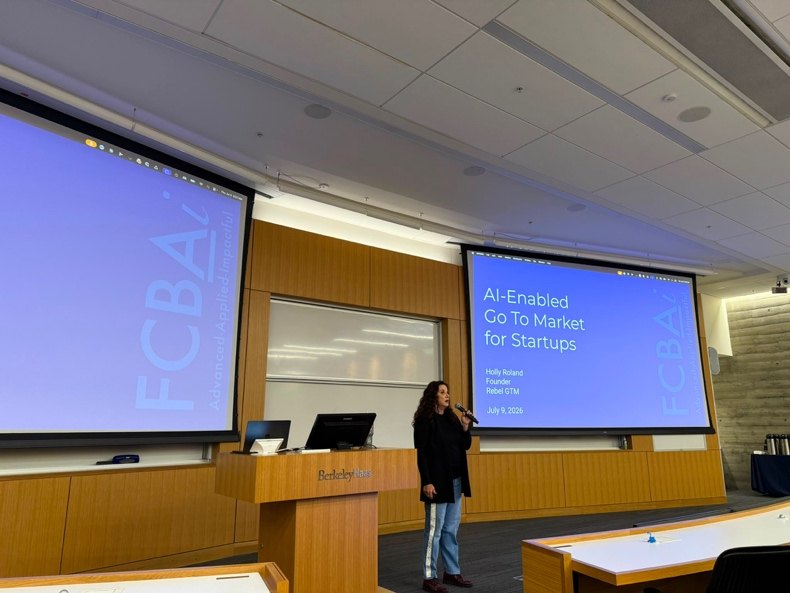
The final academic session, delivered by Holly Roland, focused on commercialization strategy.
Students explored market segmentation, positioning, product-market fit, customer acquisition and commercialization planning.
The presentation demonstrated that innovation creates value only when organizations successfully translate ideas into products and services that reach customers effectively.
An Integrated Executive Learning Journey
Taken individually, each session addressed a specific managerial competency. Collectively, however, they formed a comprehensive executive education curriculum. Participants progressed from understanding the entrepreneurial mindset and innovation ecosystems, to evaluating investment opportunities, designing customer-centered solutions, leading inclusive organizations, leveraging data strategically, applying responsible AI, managing organizational change and ultimately communicating and commercializing innovative ideas.
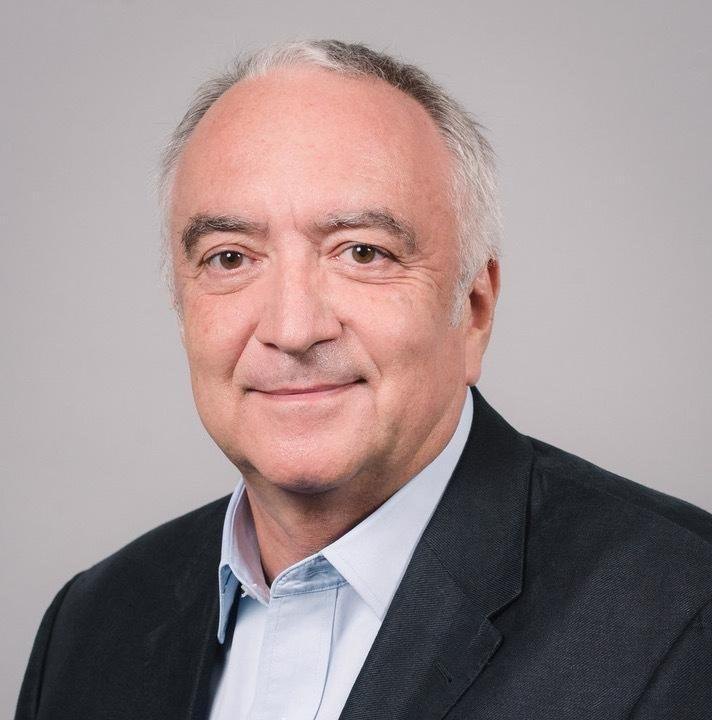
“INDE MBA is the flagship program of the CNAM-ASE partnership, the 35th anniversary of which we celebrated in June 2026. I have been involved with this partnership since 2009 and have witnessed the significant evolution of the managers participating in the program. For several years now, our students have been top-tier managers who possess not only multilingual capabilities and advanced technical and managerial skills but also a mastery of the codes and practices found in large, international matrix organizations. Our role is to support them in this positive transformation, aiming for strengthened leadership, rapid adaptability and an optimistic mindset to help companies navigate change. It is no easy task to aim for the effective use of technology—including AI—while simultaneously striving to reduce environmental impact. All these changes make returning to study at ASE—with its excellent joint French-Romanian faculty from CNAM and ASE/BBS—a valuable step. Our teaching teams are highly motivated and enthusiastic about supporting the students’ positive transformation. We are guided by several key principles: enhancing skills, a commitment to training individuals who contribute to the ongoing global transformation and the goal of strengthening European business enterprises.” (Professor Jean Michel Raicovitch, CNAM MBA Director & Chair Professor of Marketing)
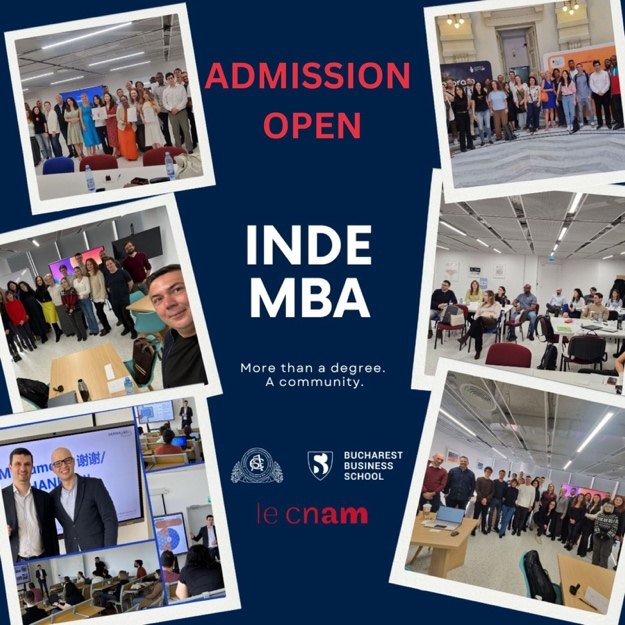
Launched in 1991, the INDE MBA program is the longest-running program of its kind in Romania and serves as a genuine academic bridge between Bucharest and Paris. The double degree program stands as a benchmark of excellence in management education, built upon a solid partnership between the Bucharest Academy of Economic Studies (ASE) and CNAM Paris.
If you are looking for an MBA that combines academic rigor, international exposure, practical learning and a format designed for working professionals, I encourage you to explore the INDE MBA @BBS-ASE.
Admissions are now open. If you would like to know more, you can send us an e-mail: inde@ase.ro.
ABOUT
- Professor PhD Mădălina Meghișan-Toma, Vice-Dean, Bucharest Business School; Program Director, INDE MBA
- Subjects taught: Marketing & Ethics and Academic Integrity