
This summer, Bucharest Business School (BBS) took an important step towards strengthening its role as a platform for maritime leadership, regional cooperation and applied knowledge. Through the second edition of the Shipping and Port Leadership Summer School, the PORTS project and the presentation of a data-driven poster at the 34th CEEMAN Annual Conference, BBS brought together research, practice and education around one strategic question: how can Romania and the Port of Constanța strengthen their role in the Trans-Caspian “Middle Corridor”?
The answer is closely connected to people. Infrastructure and policy are essential, but sustainable development also depends on professionals who understand shipping markets, port operations, logistics, investment, digitalisation, leadership and regional cooperation. This is the motivation behind the launch of the new MBA in Shipping and Port Leadership, beginning in the academic year 2027–2029.
A summer of applied learning
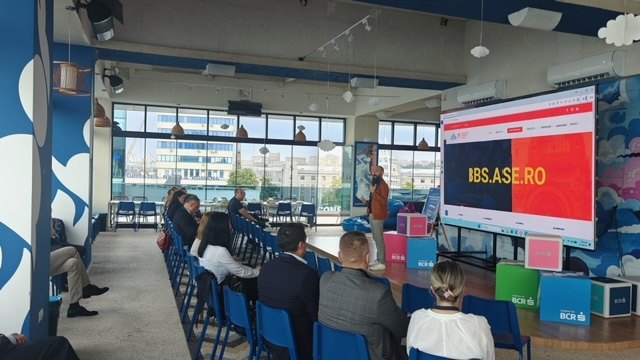
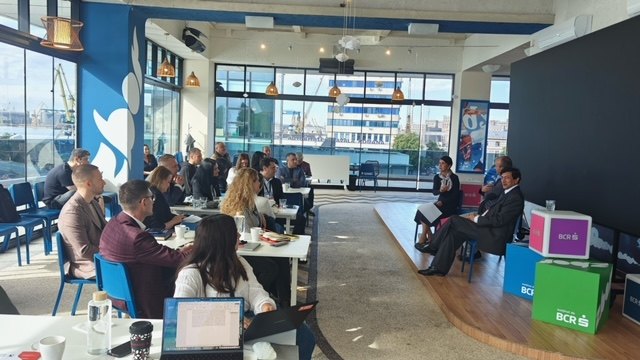
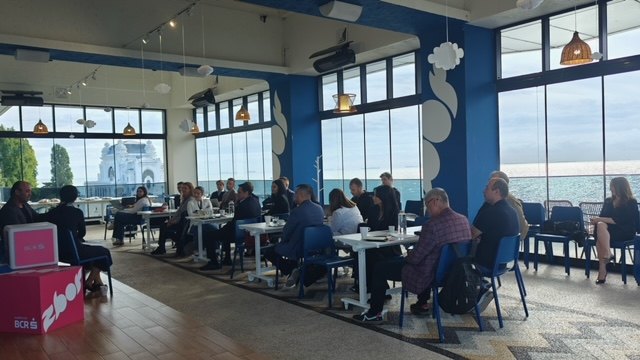
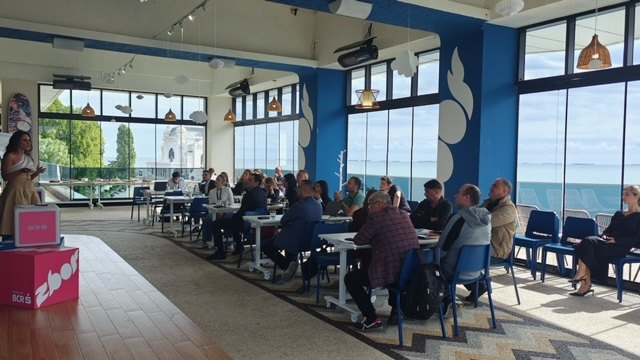
The second edition of the Shipping and Port Leadership Summer School, held from 21 to 25 September 2026, focused on the theme “The Middle Corridor in Practice: Strategy, Operations and Romania’s Gateway Role.” The programme examined the Port of Constanța as a strategic gateway connecting Romania and Europe with the Black Sea, the South Caucasus and Central Asia.
The Summer School was developed in connection with the PORTS project, “Port of Constanța: Connectivity, Capacity, and Romania’s Strategic Role in the Trans-Caspian Trade Route.” Its purpose was to examine the practical conditions required for improving connectivity, increasing capacity, reducing administrative and operational delays, and strengthening cooperation along the corridor.
Participants explored the Middle Corridor from multiple perspectives:
- shipping markets and maritime trade;
- port connectivity and multimodal transport;
- port capacity and operational efficiency;
- logistics and corridor coordination;
- digitalisation and data-based decision-making;
- investment, sustainability and resilience;
- leadership and cooperation across countries and institutions.
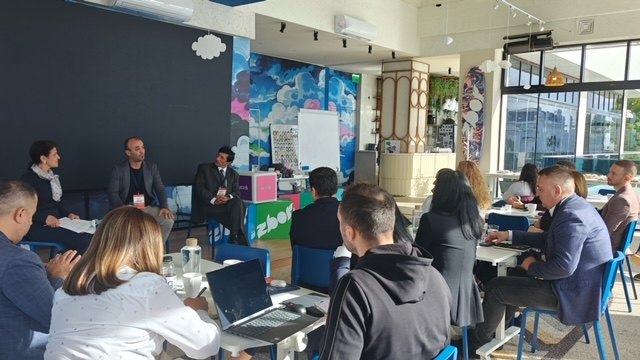
The Summer School created a space in which academic concepts could be tested against professional experience. Discussions with practitioners helped connect strategic analysis with the everyday realities of shipping companies, ports, logistics operators and public institutions.
Evidence for strategic action
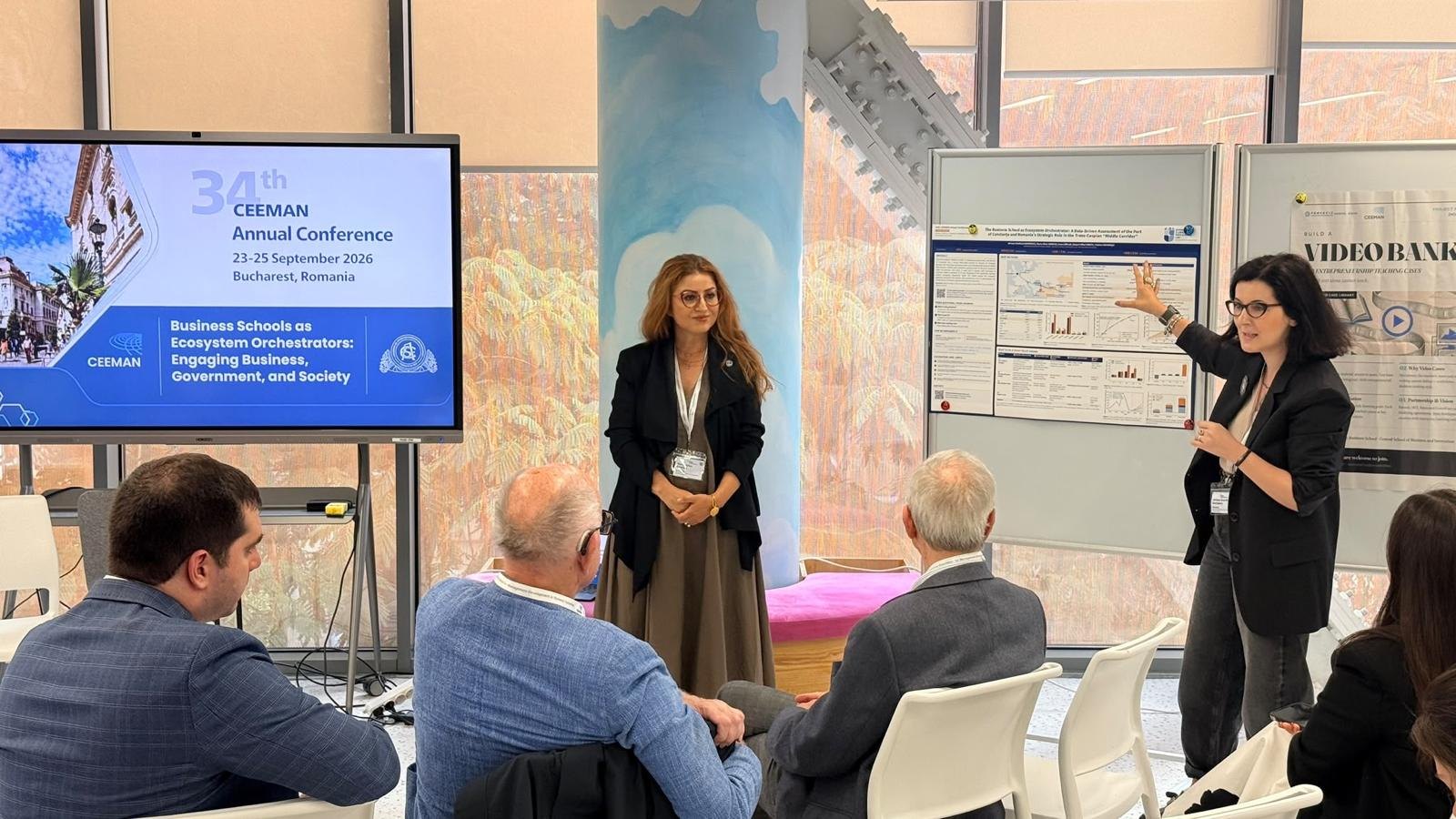
A central output of this work was a data-driven assessment of the Port of Constanța and Romania’s strategic role in the Trans-Caspian “Middle Corridor.” The analysis was developed by the Business Economics Data Science Lab (BEDSL@ASE) in collaboration with Bucharest Business School.
The assessment focused on the connectivity of the Caspian chain—Kazakhstan, Azerbaijan and Georgia—with European markets. One of the key findings was that the chain currently realises approximately 57% of its potential. The analysis identified the Constanța–Poti/Batumi maritime link as a critical bottleneck.
The model estimates that one regular ro-ro service on this connection could generate approximately USD 7.3 billion in Romanian seaborne trade, while three years of inaction could result in an estimated loss of approximately USD 2.3 billion.
These results should not be understood as a simple prediction detached from context. They are part of a scenario-based analysis that allows users to test different assumptions concerning routing shares, connectivity, trade elasticity, border delays and maritime services. This approach makes the model transparent and supports informed discussion among policymakers, business leaders and researchers.
The analysis was translated into a SMART policy agenda built around four measures:
- establishing a regular ro-ro connection between Constanța and Poti/Batumi;
- reducing cargo-release times by one day;
- introducing a single corridor ticket and harmonised documentation;
- accelerating digital freight and customs-data systems.
Together, these measures illustrate how targeted coordination, improved information flows and focused services can complement infrastructure investment.
Business schools as ecosystem orchestrators
The work undertaken this summer reflects a broader understanding of the role of a business school. A business school can do more than deliver courses or conduct research in isolation. It can act as an ecosystem orchestrator, bringing together academic experts, business leaders, policymakers, port authorities, shipping companies, logistics providers and international partners.
This role requires a continuous connection between three elements:
- evidence, generated through research and data analysis;
- practice, contributed by professionals and organisations working in the sector;
- teaching, through which knowledge is transferred to current and future decision-makers.
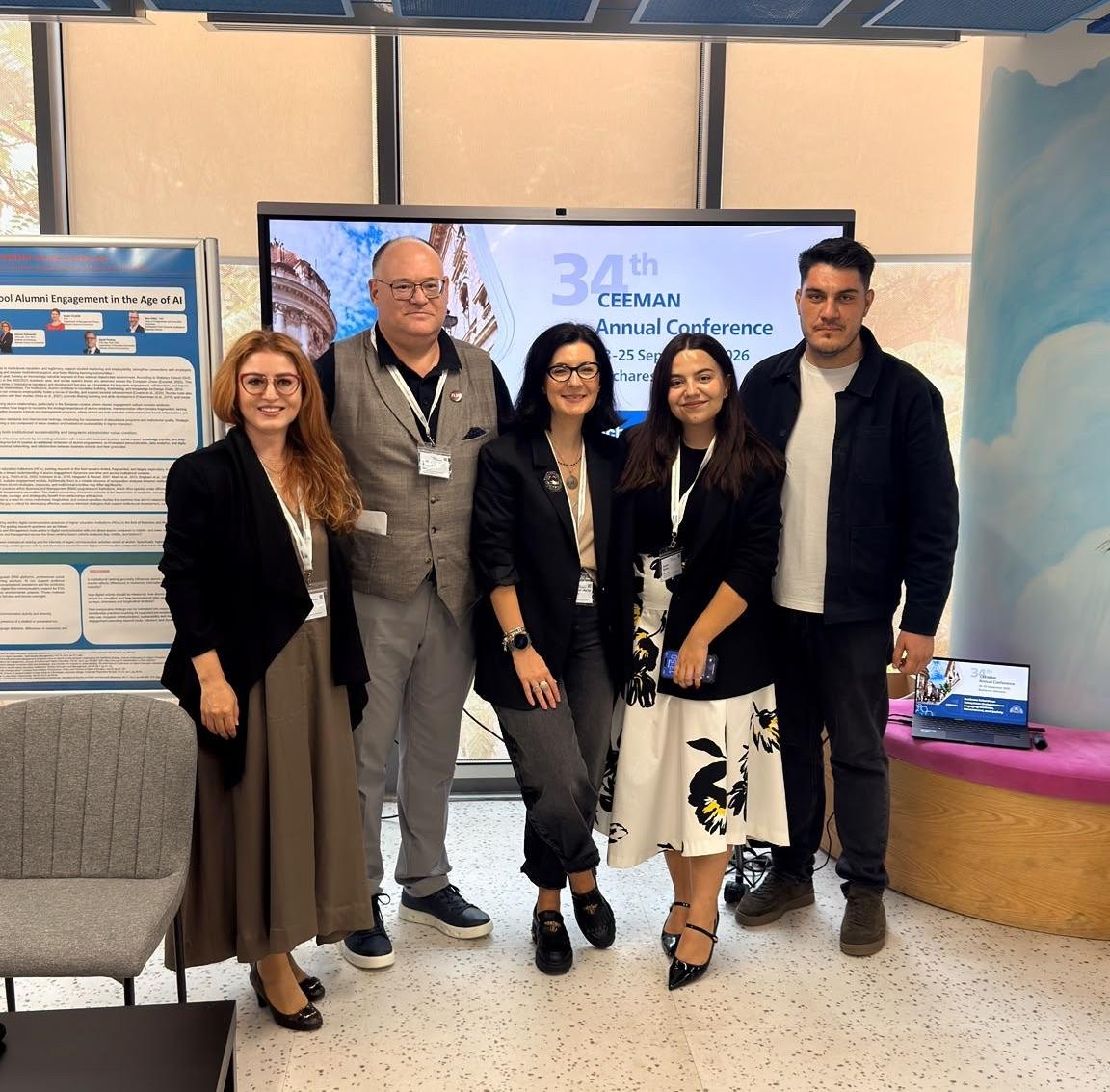
The PORTS model, the Summer School and the CEEMAN poster session formed three connected stages of this process. The model provided an evidence base; the Summer School tested its assumptions with practitioners; and the international conference created an opportunity to share the approach with the wider academic and business-school community.
The result is not a one-time event, but a platform for continued dialogue and cooperation.
Launching the MBA
The new MBA in Shipping and Port Leadership is designed to carry this work forward. It will provide professionals with advanced knowledge in shipping, port management, maritime logistics, business strategy, leadership and regional connectivity.
The programme will also create a professional network. Participants will be able to learn alongside peers from Romania and from countries engaged in commercial relations with Romania or connected to the Middle Corridor. This international dimension is essential because maritime and port challenges do not stop at national borders.
The MBA will bring together professionals from:
- shipping companies and ship-management organisations;
- port authorities and terminal operators;
- logistics and freight-forwarding companies;
- customs and public administration;
- maritime services and infrastructure providers;
- financial, consulting and technology organisations.
Through lectures, applied projects, case studies, professional discussions and peer learning, participants will examine real challenges affecting the maritime and port sectors. They will be encouraged to apply the knowledge gained in their own organisations and countries and to maintain professional relationships with specialists across the region.
In this way, the MBA will create a platform for knowledge transfer, business development and long-term cooperation.
Industry and professional support
The programme is supported by representative organisations from the maritime and port sectors, including the Romanian Ports Development Association, the Constanța Port System Association and the Association of Shipowners and Port–River Operators of Romania (AOPFR).
Their support confirms the programme’s relevance to the needs of employers, professionals and decision-makers working in shipping, ports, logistics and inland-waterway transport. It also strengthens the link between the curriculum and the practical challenges faced by the industry.
These partnerships can support guest lectures, applied projects, professional networking, consultation on curriculum development and the continuous updating of the programme in line with sectoral needs.
Looking ahead
The development of the Middle Corridor and the strengthening of Romania’s gateway role will require coordinated action, reliable evidence and professionals capable of working across institutional and national boundaries.
The Shipping and Port Leadership Summer School demonstrated the value of bringing research and practice together. The PORTS project provided a structured way to analyse connectivity, capacity and strategic opportunity. The CEEMAN conference offered an international setting in which to share the results. The new MBA will create a long-term educational and professional platform for continuing this work.
At the centre of this initiative is a simple principle: evidence should inform practice, practice should shape teaching, and teaching should prepare the people who will lead change.
For BBS, the launch of the MBA in Shipping and Port Leadership is therefore the introduction of a new programme and the next stage in building an ecosystem for maritime leadership, regional cooperation and sustainable development around the Port of Constanța and the wider Trans-Caspian trade route.

ABOUT
- Lecturer Maria A. Caratas PhD.